Key Points
- Public concern has intensified over a proposal by Indian River State College (IRSC) President Dr Timothy E. Moore to eliminate the institution’s historical swimming and diving programs amid budget restructuring.
- The IRSC Board of Trustees voted to table the decision on cutting the national championship-winning aquatic teams to conduct a formal review ahead of their scheduled November 2026 meeting.
- Local residents are questioning institutional spending priorities, pointing to President Moore’s $695,400 annual compensation package while calling for innovative, entrepreneurial solutions to protect athletic programs.
- Parallel environmental debates in Martin and St. Lucie counties focus on plans to dredge 2.4 million cubic yards of nitrogen- and phosphorus-heavy muck from the St. Lucie River and Indian River Lagoon.
- Community advocates have raised ecological warnings regarding the terrestrial dumping of dredged muck in Palm City, citing potential groundwater contamination, air pollution, and severe odor risks.
Fort Pierce (Florida Report Daily) November 09, 2026 – Tensions surrounding public administration, ecological preservation, and municipal infrastructure have culminated across Florida’s Treasure Coast as residents confront major policy decisions in higher education, environmental management, and community policing. Public debate has erupted over Indian River State College’s (IRSC) proposed elimination of its historic swimming and diving teams—a program holding 52 consecutive men’s national titles—due to fiscal constraints highlighted by IRSC President Dr Timothy E. Moore. Concurrently, environmental advocates in Martin and St. Lucie counties are raising formal warnings over regional plans to dredge and relocate 2.4 million cubic yards of pollutant-laden muck from local estuaries onto inland property in Palm City. Meanwhile, local civic leaders have issued calls of support for law enforcement personnel in Fort Pierce as public oversight across regional operations intensifies.
- Key Points
- Why Is Indian River State College Considering the Elimination of Its Championship Swimming and Diving Program?
- What Environmental Risks Are Associated with the St. Lucie River Muck Dredging Project?
- How Are Local Communities Engaging with Municipal Law Enforcement in Fort Pierce?
- Background of Regional Estuary Restoration and Collegiate Athletic Financing
- Prediction: How Will These Fiscal and Environmental Decisions Affect Treasure Coast Residents and Students?
Why Is Indian River State College Considering the Elimination of Its Championship Swimming and Diving Program?
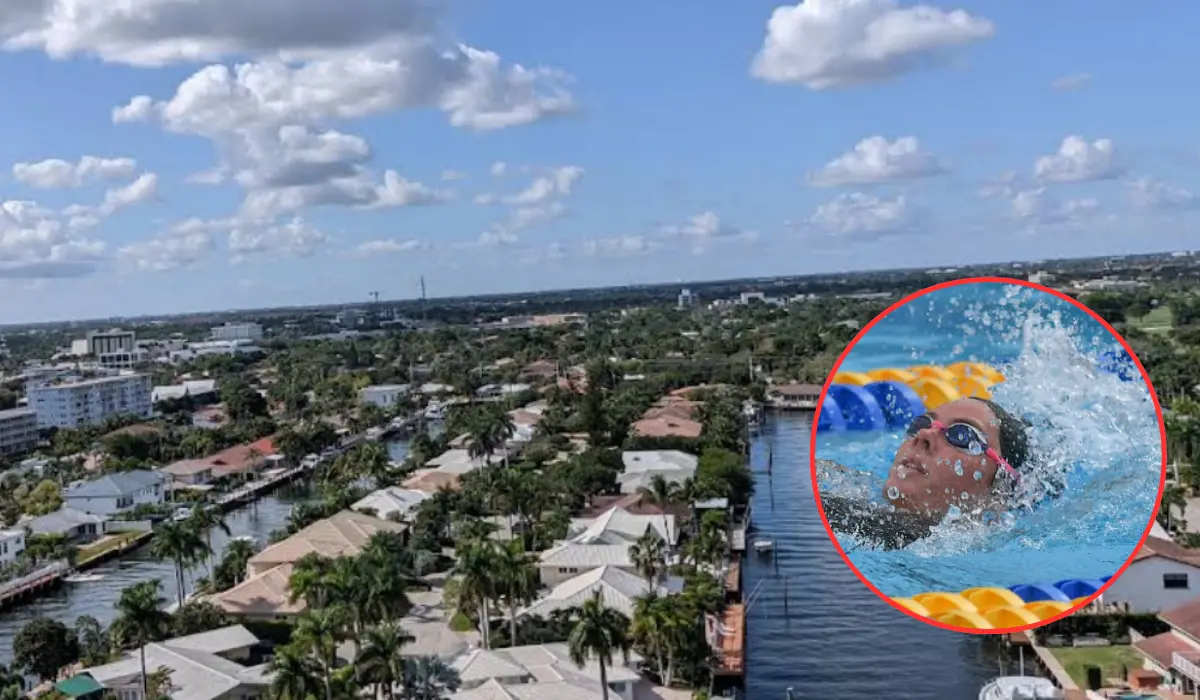
As reported by Braden Keith of SwimSwam and Dan D’Addona of Swimming World Magazine, Indian River State College (IRSC) has encountered strong public pushback following administrative proposals to terminate its men’s and women’s swimming and diving programs. The Pioneer aquatic program stands as one of the most successful in American collegiate history, with the men’s team securing 52 consecutive NJCAA national titles and the women’s team capturing 48 national championships.
Addressing the fiscal pressures facing the institution, IRSC President Dr Timothy E. Moore indicated that right-sizing the college’s operating budget requires difficult financial decisions across its $4.9 million total athletic allocation. As reported by St. Lucie Voice, Dr Moore stated: “Time is not our friend. We have a mission to educate 24,000 students. It’s not that I don’t like the program… As president I have to right size the budget. I didn’t create the circumstances, I inherited them. This is a tough fiscal position”.
Following extensive public testimony and petitions gathering over 10,000 signatures, the IRSC Board of Trustees voted to table the proposal during their late October session. The board instructed the administration to compile a comprehensive impact report featuring community input, with a formal vote delayed until the trustee meeting on 17 November 2026.
Local community members, including Port St. Lucie resident Peter Degen, have expressed frustration over administrative priorities, pointing to President Moore’s reported annual compensation of $695,400. In a public commentary addressed to the institution’s leadership, Degen argued that administrative leaders should leverage entrepreneurial strategies and open-door community proposals to secure alternative funding rather than opting to dissolve world-class athletic heritage.
What Environmental Risks Are Associated with the St. Lucie River Muck Dredging Project?
Simultaneously, environmental management plans involving the St. Lucie River and Indian River Lagoon have generated widespread debate among Martin County residents. The restoration strategy involves extracting approximately 2.4 million cubic yards of accumulated organic muck—heavily saturated with nitrogen, phosphorus, and agricultural run-off—from regional waterbed floors and depositing the material onto designated terrestrial sites in Palm City.
Local environmental commentators, including Palm City resident Cecile Scofield, have questioned the long-term ecological safety of relocating massive volumes of marine waste to inland sites. Critics emphasize that high concentrations of phosphorus in terrestrial soil impair plant health, deteriorate local air quality, and risk leaching nitrogen directly into regional groundwater tables during heavy Florida rainfall events.
Drawing historical parallels to environmental waste mismanagements—such as illegal shell-dumping incidents in Rhode Island that generated widespread organic decay odors—residents warn that the decomposition of marsh gas, ammonia, and sulfur compounds within the relocated muck could create severe air quality disruptions for nearby residential neighborhoods along Florida’s Turnpike corridor.
Additionally, community members have raised questions regarding long-term runoff containment, asking whether severe storm events could cause the chemical pollutants contained within the relocated muck to wash back into the surrounding aquatic ecosystems.
How Are Local Communities Engaging with Municipal Law Enforcement in Fort Pierce?
Amid regional policy debates, community relationships with local municipal services have remained a focal point for civic organizations in St. Lucie County. Fort Pierce residents have publicly highlighted the efforts of the Fort Pierce Police Department to maintain public safety and foster transparent police-community relations.
Civic commentators, including Fort Pierce resident Charlie Hayek, noted that ongoing outreach initiatives and police-sponsored community events serve an essential role in breaking down barriers between residents and law enforcement officers. Highlighting the demanding conditions faced by officers performing solo night patrols, community advocates have encouraged public appreciation for emergency services personnel as the region approaches the annual holiday season.
Background of Regional Estuary Restoration and Collegiate Athletic Financing
The dual controversies surrounding IRSC’s athletic budget and the St. Lucie estuary restoration stem from long-standing regional infrastructure and economic dynamics on Florida’s Treasure Coast. The Indian River Lagoon and St. Lucie River estuaries have suffered from decades of organic muck accumulation caused by urban runoff, agricultural discharge, and controlled releases from Lake Okeechobee. These muck deposits smother native seagrass beds, release excessive nutrient loads, and trigger recurring toxic blue-green algae blooms. Regional ecological agencies have prioritized large-scale dredging projects as an essential mechanism to restore estuarine water clarity and benthic health.
Concurrently, two-year community colleges nationwide face growing financial strain stemming from shifting enrollment demographics, rising operational costs, and altered state funding formulas. While IRSC’s aquatic teams operate out of the Anne Wilder Aquatic Complex—a premier facility featuring 50-meter and 25-meter pools—non-revenue-generating sports have come under increased institutional scrutiny across the National Junior College Athletic Association (NJCAA). The debate at IRSC mirrors broader national challenges regarding how community colleges balance administrative compensation, academic mission expenses, and the preservation of historic athletic traditions.
Prediction: How Will These Fiscal and Environmental Decisions Affect Treasure Coast Residents and Students?
The upcoming administrative votes and environmental policy implementations scheduled across St. Lucie and Martin counties are projected to deliver significant structural outcomes for local residents, student-athletes, and regional property owners.
Impact on Student-Athletes and Higher Education Stakeholders: If the IRSC Board of Trustees votes to proceed with eliminating the swimming and diving programs during their 17 November 2026 meeting, the decision will eliminate a primary athletic pathway for junior college swimmers seeking Division I collegiate transfers or international competition opportunities. Such a move could diminish IRSC’s national reputation as a premier athletic institution and trigger changes in regional sports tourism revenue generated by national aquatic events at the Anne Wilder Complex. Conversely, if community fundraising and administrative innovation yield a sustainable endowment model, it may establish a template for preserving non-revenue collegiate sports across the United States.
Impact on Palm City Homeowners and Ecological Policy: For residents in Palm City and surrounding Martin County communities, the execution of the 2.4 million cubic yard muck relocation project will require rigorous environmental monitoring by state environmental protection agencies. Should containment measures prove insufficient during heavy rain seasons, property owners downwind of disposal sites may face reduced air quality and potential threats to private well water supplies. Conversely, successful execution of the dredging operations without terrestrial contamination would accelerate the biological recovery of the St. Lucie River and Indian River Lagoon, boosting marine biodiversity, recreational fishing, and waterfront real estate values over the coming decade.