Key Points
- Florida Governor Ron DeSantis is set to break the state’s annual execution record on Thursday, 19 November 2026, with the scheduled lethal injection of 71-year-old Thomas Mitchell Overton at 6:00 p.m. EST at Florida State Prison in Raiford.
- Overton was sentenced to death in 1999 for the August 1991 murders of Tavernier couple Michael MacIvor, 30, and his eight-month-pregnant wife, Susan “Missy” MacIvor, 29, as well as the killing of their unborn child.
- If carried out, Overton’s execution will mark Florida’s 20th execution in 2026—surpassing the previous state record of 19 set in 2025, exceeding the rest of the United States combined this year, and bringing Florida’s two-year total to 39 executions.
- Overton continues to maintain his innocence; his legal team appealed on grounds including alleged evidence mishandling, false jailhouse informant testimony, non-unanimous jury recommendations (8–4 and 9–3), and Governor DeSantis’ 2021 blanket refusal of clemency applications for convicted murderers and felony sex offenders.
- On 13 November 2026, the Florida Supreme Court denied Overton’s motion to vacate and declined to grant a stay, while an emergency stay application submitted on 14 November remains pending before the United States Supreme Court.
- Two additional executions are already scheduled in Florida for December 2026: Ricardo Gonzalez on 1 December and Willie Seth Crain Jr. on 19 December.
- On 11 and 12 November 2026, spiritual adviser Rev. Jeff Hood and three of Florida’s 30 death row exonerees—including Seth Penalver—publicly appealed to Governor-elect Byron Donalds to pause executions for six months upon taking office in January 2027.
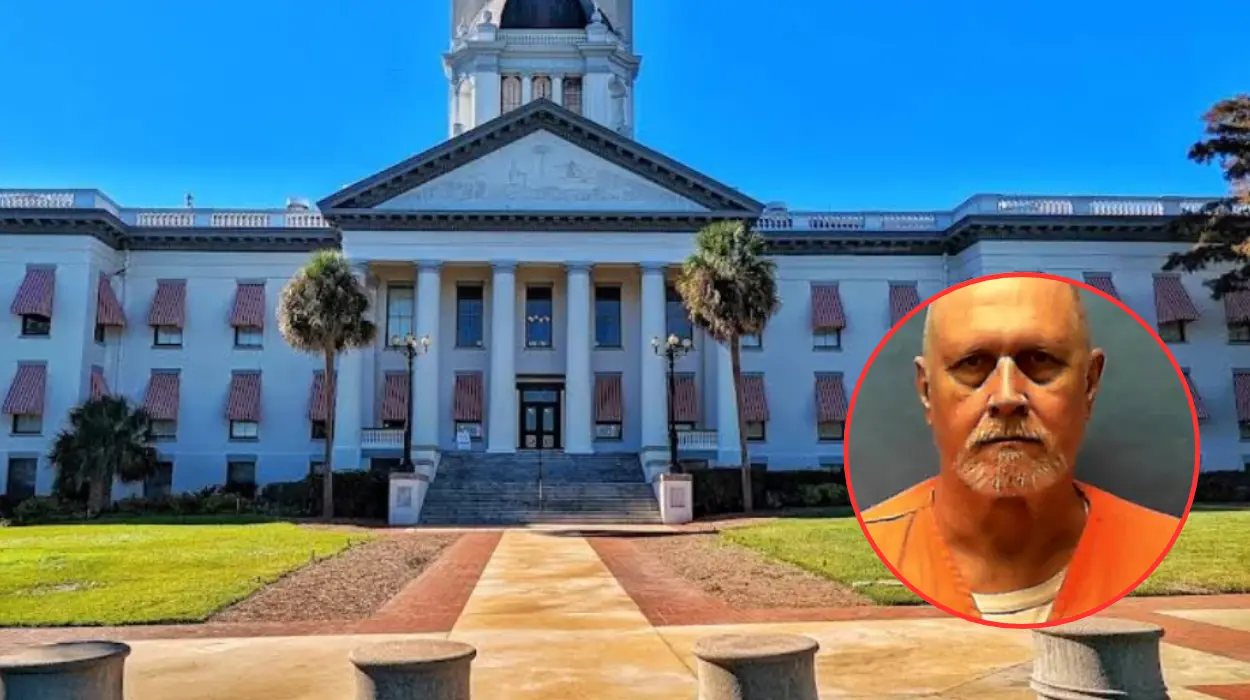
Tallahassee (Florida Report Daily) November 19, 2026 – Florida is scheduled to break its annual execution record on Thursday, 19 November 2026, with the lethal injection of 71-year-old Thomas Mitchell Overton at 6:00 p.m. EST at Florida State Prison in Raiford. Convicted in 1999 of the 1991 murders of Tavernier couple Michael and Susan “Missy” MacIvor and the killing of their eight-month-pregnant unborn child, Overton would become the 20th person executed in Florida in 2026. While the Florida Supreme Court denied a stay of execution on 13 November, an emergency appeal challenging Florida’s clemency process remains pending before the United States Supreme Court as activists and death row exonerees call on Governor-elect Byron Donalds to pause executions in January.
- Key Points
- When and Where Will Thomas Overton Be Executed?
- Who Is Thomas Overton and What Crimes Was He Convicted Of?
- What Legal Challenges Has Thomas Overton’s Defence Team Raised?
- What Have Activists and Exonerees Asked Governor-Elect Byron Donalds to Do?
- What Is the Background Behind Florida’s Death Penalty Laws and Execution Pace?
- How Could These Developments Affect Florida’s Justice System and Incoming Administration?
When and Where Will Thomas Overton Be Executed?
Thomas Mitchell Overton, 71, is scheduled to be executed by lethal injection beginning at 6:00 p.m. EST on Thursday, 19 November 2026, at Florida State Prison in Raiford, located approximately 45 miles southwest of Jacksonville, pursuant to a death warrant signed by Governor Ron DeSantis on 21 October 2026.
As reported by C. A. Bridges of the USA TODAY Network-Florida and Mitch Perry of Florida Phoenix, Overton’s execution would establish a new modern annual record for the state of Florida. Prior to 2025, Florida’s modern single-year record stood at eight executions—the same total number of death warrants issued by Governor DeSantis across his first six years in office between 2019 and 2024. Following an executive order issued by United States President Donald Trump upon taking office in 2025 directing federal prosecutors to seek capital punishment where possible and encouraging state attorneys general to follow suit, Governor DeSantis accelerated Florida’s execution schedule.
Florida carried out 19 executions in 2025 and tied that record on 5 November 2026 with the execution of Jesse Guardado, who had been convicted of the 2004 robbery and murder of 75-year-old activist Jackie T. Malone. Overton will become the 20th inmate put to death in Florida in 2026—a figure that surpasses the total number of executions conducted across the rest of the United States combined this year and represents the 38th execution nationwide in 2026. Governor DeSantis has stated that the accelerated pace of death warrants is intended to deliver long-awaited justice for victims and their families, some of whom have waited decades. Despite the increase, Florida’s annual total remains below the modern United States record set in 2000, when Texas executed 40 people.
Two additional Florida death row prisoners already have active execution dates scheduled for December 2026: Ricardo Gonzalez, convicted of the 1992 murder of North Miami police officer Steven Bauer during a bank robbery, is scheduled for execution on 1 December, and Willie Seth Crain Jr., convicted of the 1998 murder of seven-year-old Amanda Brown, is scheduled for 19 December.
Who Is Thomas Overton and What Crimes Was He Convicted Of?
In 1991, Thomas Mitchell Overton, then 35, worked at an Amoco petrol station in Monroe County in the Florida Keys, where he became acquainted with 29-year-old Tavernier schoolteacher Susan Michelle “Missy” MacIvor.
According to court records cited by C. A. Bridges of the USA TODAY Network-Florida, two men incarcerated alongside Overton at the Monroe County Detention Center testified that Overton admitted breaking into the MacIvor residence on 22 August 1991 specifically intending to sexually assault Susan MacIvor. One inmate, James Zientek, testified that Overton recounted the crime in detail as part of a scheme for Zientek to tell investigators that a different prisoner had confessed.
Zientek testified that Overton described conducting surveillance on the MacIvors’ home multiple times before approaching the residence on the night of 22 August equipped with tools, a firearm, and a police scanner while dressed in a dark “Ninja-type suit.” After severing the telephone line, Overton entered via a balcony and encountered 30-year-old Michael MacIvor in the kitchen, where Overton struck him in the back of the head with a pipe and punched him unconscious. When Susan MacIvor ran screaming from the bedroom, Overton restrained her, covered Michael’s face, sexually assaulted the eight-month-pregnant woman, and strangled her because, according to Zientek’s testimony, he “doesn’t leave any witnesses.” Overton also kicked Michael MacIvor in the stomach and strangled him; the couple’s unborn child did not survive. Zientek testified that Overton attempted to mislead investigators by leaving an unrelated shell casing and torn address book pages at the scene and taking photographs of Susan’s pregnant stomach.
During the subsequent investigation, authorities identified Overton as a known burglar whom police also suspected in the murder of 20-year-old Rachelle Surrett. Following his arrest in late 1996 during an unrelated burglary, Overton refused to provide a blood sample. Days later, according to court records, Overton cut his throat with a razor blade; correctional officers intervened to stop the bleeding, and police obtained a court order to test blood recovered from his towel, which matched DNA found at the MacIvor crime scene. In 1999, Overton was sentenced to death by non-unanimous jury recommendations (8–4 and 9–3) for the murders of Susan and Michael MacIvor, alongside two life sentences for sexual battery and armed burglary, and 15 years’ imprisonment for killing an unborn child.
What Legal Challenges Has Thomas Overton’s Defence Team Raised?
Overton, who is a United States Army veteran and a survivor of the state-run Arthur G. Dozier School for Boys, has consistently maintained his innocence throughout nearly three decades on death row. His legal representatives have filed multiple state and federal appeals alleging severe forensic and procedural flaws in his prosecution.
As reported by C. A. Bridges of the USA TODAY Network-Florida and the Death Penalty Information Center, Overton’s post-conviction filings cited repeated mishandling of biological evidence, police consultation with an Orlando psychic during the investigation, contested DNA results, and alleged false testimony by jailhouse informant James Pesci. Defence attorneys also pointed to an affidavit from another inmate, Guy Green, stating that Overton had denied committing the murders and that Green was pressured and coached to implicate him. Furthermore, according to Floridians for Alternatives to the Death Penalty (FADP), defence filings noted that recovered fingerprints and palm prints did not match Overton, that hairs found on tape used to bind the victims were never DNA tested, and that biological evidence had been stored in the personal home refrigerator of a Monroe County Sheriff’s Office serologist.
Overton’s latest appeals also challenge Florida’s executive clemency system, arguing that Governor DeSantis’ 2021 blanket policy dismissing all clemency applications from individuals convicted of murder or felony sex offences—regardless of individual case circumstances—deprives death-sentenced inmates of due process. In their petition to the United States Supreme Court, Overton’s attorneys wrote that the “clemency process as it was originally intended no longer exists for death-sentenced inmates in Florida”.
On 13 November 2026, the Florida Supreme Court denied Overton’s motion to vacate his convictions and ruled there was “no need to stay Overton’s execution,” declining to consider further rehearings. An emergency application for a stay of execution filed on 14 November 2026 remains pending before the United States Supreme Court.
What Have Activists and Exonerees Asked Governor-Elect Byron Donalds to Do?
Ahead of Overton’s scheduled execution, religious leaders, anti-death penalty advocates, and former Florida death row exonerees appealed to Governor-elect Byron Donalds, who takes office in January 2027, to halt executions temporarily.
As reported by C. A. Bridges of the USA TODAY Network-Florida, on 11 November 2026, the Rev. Jeff Hood—an anti-death penalty advocate serving as spiritual adviser to both Ricardo Gonzalez and Willie Seth Crain Jr.—sent a public letter urging Donalds to impose a six-month moratorium on executions to review Florida’s capital punishment procedures and human impact. In his letter to Donalds, Rev. Hood stated: “Nobody chose this pace. No legislature voted for it. No commission studied it. No voter was asked whether Florida should execute at this rate.”
On 12 November 2026, three of the 30 former Florida death row prisoners exonerated since 1971—the highest total of any United States state—issued a similar appeal calling on Donalds to pause executions and review state statutes governing wrongful convictions. Speaking on behalf of the group, Seth Penalver—who spent 18 years incarcerated, including 13 years on death row, for a 1994 Broward County triple murder before being acquitted in 2012—stated: “We are asking the governor — and congratulations on your win — to stop executions and review every case individually”. Penalver added: “Florida has more death row exonerees than any other state. I would like and respectfully ask Governor-elect Donalds to think about what that means. Thirty men were convicted and sentenced to die, and those convictions were wrong.”
Additionally, as reported by Leah Roemer of the Death Penalty Information Center, Grace Hanna, Executive Director of Floridians for Alternatives to the Death Penalty, called for clemency on the grounds that Overton would be at least the 12th former resident of the Dozier School for Boys executed by Florida, stating: “Florida’s acknowledgement of the abuse at Dozier must extend to mercy for the men who survived it”.
What Is the Background Behind Florida’s Death Penalty Laws and Execution Pace?
Florida reinstituted capital punishment in 1972 and has historically maintained one of the largest death row populations in the United States alongside the nation’s highest number of death row exonerations. Under Florida law, the governor holds sole authority to sign death warrants once a prisoner’s direct appeals are exhausted. In 2016, the United States Supreme Court ruled in Hurst v. Florida that Florida’s sentencing scheme was unconstitutional because judges, rather than juries, made the factual findings necessary to impose a death sentence. However, the Florida Supreme Court subsequently ruled that Hurst relief applied only retroactively to cases finalised after the U.S. Supreme Court’s 2002 decision in Ring v. Arizona, leaving inmates convicted prior to 2002—including Overton, whose conviction became final before that cutoff—ineligible for resentencing despite non-unanimous jury recommendations. In 2023, Florida enacted legislation lowering the threshold for future capital sentences from jury unanimity to an 8–4 vote.
How Could These Developments Affect Florida’s Justice System and Incoming Administration?
The execution of Thomas Overton and the two additional warrants scheduled for December 2026 will place immediate legal and administrative decisions before Governor-elect Byron Donalds upon his inauguration in January 2027. For death row inmates whose cases predate the 2002 Hurst retroactivity cutoff or who seek executive clemency, the U.S. Supreme Court’s response to Overton’s due process challenge could establish whether Florida’s clemency board is required to conduct individualised reviews. Simultaneously, the incoming administration will face sustained scrutiny from victims’ families seeking swift enforcement of sentences on one side, and legal advocates, exonerees, and faith leaders pressing for a moratorium and forensic review of older capital convictions on the other.