Key Points
- Florida Governor Ron DeSantis has signed a death warrant for 70-year-old Thomas Mitchell Overton for the brutal 1992 double murder of a couple in Tavernier.
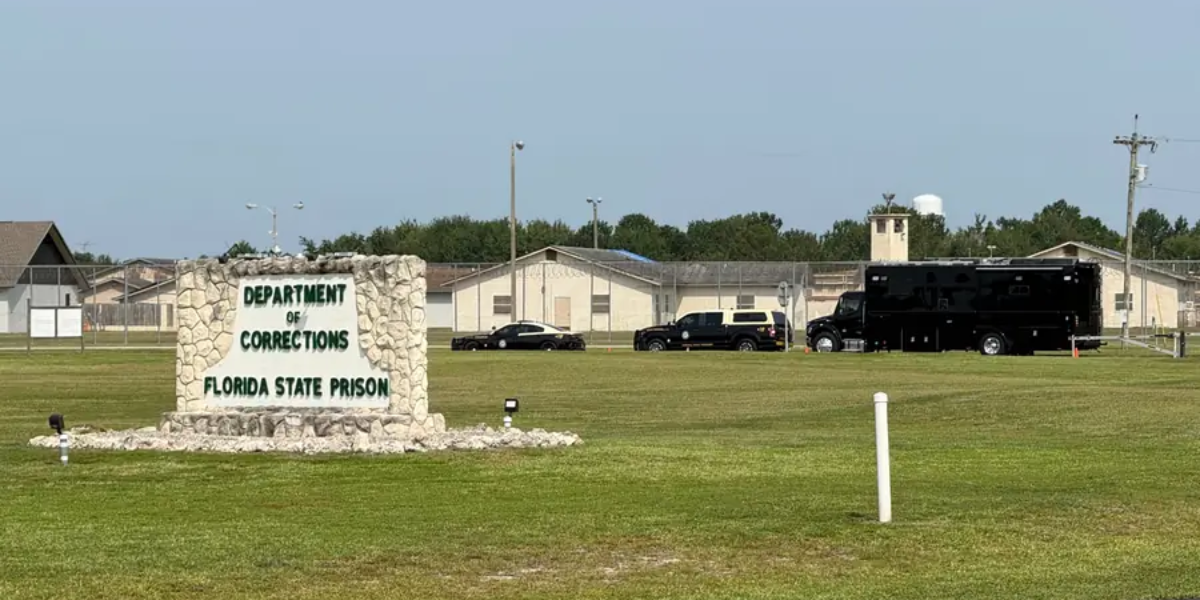
- The execution is set for 6:00 p.m. on November 18 at Florida State Prison in Starke.
- If carried out following the scheduled November 5 execution of Jesse Guardado, Overton’s execution will be Florida’s 20th this year, marking the highest annual execution total in the state since the U.S. Supreme Court reinstated the death penalty in 1976.
- Overton was convicted of the home-invasion murder of Michael MacIvor, 30, and the rape and murder of his eight-month-pregnant wife, Missy MacIvor, 29, whose unborn child also died.
- Though the case went unsolved for years, DNA tests conducted on crime scene bedding in 1996 and 1998 conclusively matched Overton.
- The warrant was issued just one day after Florida executed William Reaves for the four-decade-old murder of an Indian River County Sheriff’s Deputy.
Tavernier (Florida Report Daily News) October 22, 2026 – Governor Ron DeSantis signed a death warrant on Wednesday for Thomas Mitchell Overton, setting his execution for 6:00 p.m. on November 18 at Florida State Prison in Starke. Overton, 70, was convicted in 1999 for the 1992 double murder of Michael and Missy MacIvor in their Tavernier home in the Florida Keys. The scheduled lethal injection would mark Florida’s 20th execution of the year, representing the highest annual total since the reinstatement of capital punishment in 1976.
- Key Points
- What Are the Specific Details Surrounding the 1992 Tavernier Murders?
- How Did Forensic DNA Evidence Lead to Thomas Mitchell Overton’s Conviction?
- What Is the Background of Capital Punishment Developments in Florida?
- What Do These Developments Portend for Capital Punishment Stakeholders and Policy?
As reported by staff writers of the News Service of Florida, Governor Ron DeSantis signed the legal authorization just 24 hours after the state completed the execution of William Reaves, who had been on death row for the 1986 slaying of Indian River County Sheriff’s Deputy Richard Raczkowski.
Prior to Overton’s scheduled date at Florida State Prison, state authorities are slated to carry out another execution on November 5. That death warrant applies to 64-year-old Jesse Guardado, who was sentenced to death for the 2004 murder of 75-year-old Jackie Malone in Walton County. Malone had reportedly assisted Guardado by helping him secure housing and employment following a previous prison release.
What Are the Specific Details Surrounding the 1992 Tavernier Murders?
According to official court filings cited by the News Service of Florida, Thomas Mitchell Overton was arrested in 1997 in connection with the August 1992 home invasion in Tavernier, a community located on Key Largo. The victims were Michael MacIvor, aged 30, and his wife, Susan “Missy” MacIvor, aged 29. At the time of the fatal attack, Missy MacIvor was eight months pregnant. Their unborn child did not survive the violent incident.
Judicial records indicate that Overton was acquainted with the MacIvors prior to the incident, as he worked as a service-station clerk at an Amoco station in Tavernier near the couple’s residence.
Court transcripts detail that Michael MacIvor was struck in the back of the head with a blunt object, kicked in the midsection, and subsequently strangled. Missy MacIvor was bound, sexually assaulted, and strangled.
As documented by the court’s sentencing order, fellow inmate James Zientek provided crucial testimony during the trial regarding conversations he had with Overton while both were held at the Monroe County Detention Center. As reported by trial correspondents covering the case, Zientek testified under oath that Overton confessed to breaking into the MacIvor home with the intention of sexually assaulting Missy MacIvor. Zientek stated that Overton admitted to killing the couple to muddle the crime scene and avoid detection.
The presiding judge wrote in the official sentencing order that “the evidence found at the crime scene was consistent with the testimony of Mr. Zientek and shows beyond a reasonable doubt that a fundamental part of the Defendant’s criminal plot was a carefully conceived plan to avoid detection and arrest”.
How Did Forensic DNA Evidence Lead to Thomas Mitchell Overton’s Conviction?
Despite efforts to obscure the crime scene, forensic technological developments eventually tied Overton directly to the murders. As documented in appellate court records cited by regional media outlets, biological evidence was gathered from bedding samples inside the MacIvor home following the 1992 attack.
Investigators initially interviewed Overton in 1993, but he refused to provide a voluntary DNA sample. Following an arrest on an unrelated burglary charge in 1996, law enforcement officials secured a court order to obtain biological samples after Overton was treated for self-inflicted injuries sustained while in custody.
State forensic laboratories conducted initial DNA comparisons in 1996, followed by confirmatory testing in 1998. The genetic profile extracted from the physical evidence at the crime scene provided a definitive match to Overton’s DNA.
In 1999, a Florida jury formally found Overton guilty on two counts of first-degree murder. In addition to receiving death sentences for the murders, Overton received life sentences for sexual battery committed against Missy MacIvor and for burglary of a dwelling. The court also imposed a 15-year prison sentence for the death of the unborn child.
What Is the Background of Capital Punishment Developments in Florida?
The signing of Thomas Mitchell Overton’s death warrant highlights a significant acceleration in the execution pace within the state of Florida. Following the U.S. Supreme Court’s landmark ruling in Gregg v. Georgia (1976), which reinstated capital punishment across the United States, states re-established legal frameworks for executions.
Historically, Florida’s annual execution numbers have fluctuated depending on executive policy, legal challenges to lethal injection protocols, and extended federal habeas corpus appeals. However, under the administration of Governor Ron DeSantis, the state has actively cleared long-standing backlogs of capital cases involving decades-old convictions.
Prior to 2026, the highest single-year execution record in modern Florida history was set in 2014 under former Governor Rick Scott, when eight individuals were executed. The reaching of 20 scheduled executions within a single calendar year represents an unprecedented operational pace for Florida’s Department of Corrections and state appellate courts. This rapid timeline has been facilitated by statutory adjustments to jury unanimity requirements in capital sentencing passed by the Florida Legislature, alongside expedited judicial review processes for death row inmates who have exhausted primary state and federal post-conviction appeals.
What Do These Developments Portend for Capital Punishment Stakeholders and Policy?
The impending execution of Thomas Mitchell Overton—marking a potential 20th execution in Florida in 2026—carries notable legal and institutional implications for key stakeholder groups:
- Impact on Death Row Inmates and Defense Attorneys: The heightened frequency of signed warrants signals a shortened timeline between the conclusion of standard appeals and execution dates. Defense attorneys representing capital defendants in Florida will likely face compressed timeframes to file emergency motions, clemency petitions, or federal stays of execution.
- Impact on Victim Families: For surviving family members of long-unsolved or decades-old capital cases, the swift progression from warrant to execution offers a definitive legal resolution after decades of prolonged appellate proceedings.
- Impact on the Judicial and Corrections System: The state’s judicial docket and the Department of Corrections in Starke are operating under a heightened operational tempo. Managing administrative, security, and legal protocols for multiple executions per month requires sustained resource allocation across state agencies.
- Impact on Legislative and Public Policy Debates: Florida’s position as the nation’s most active state regarding capital punishment in 2026 will likely sharpen ongoing debates among legal scholars, criminal justice reform advocates, and lawmakers regarding death penalty procedures, non-unanimous jury recommendations, and the speed of post-conviction review.