Key Points
- Filmmakers Nathan Fielder and Lance Oppenheim have released a new documentary titled “You Can See Everything,” which focuses on convicted tech entrepreneur Elizabeth Holmes.
- The film, structured as a three-movement cinematic experience, explores themes of deception, artifice, and the human condition.
- The documentary’s release has renewed critical interest in Oppenheim’s earlier work, specifically his 2020 debut feature documentary, “Some Kind of Heaven.”
- “Some Kind of Heaven,” co-produced by Darren Aronofsky and The New York Times, offers an intimate look inside The Villages, Florida’s massive retirement community.
- Oppenheim moved into The Villages to document residents who challenge the community’s idealized, idyllic reputation, focusing on personal struggles involving addiction, loneliness, and financial instability.
TAMPA, Fla. (Florida Report Daily) October 24, 2026 – A new column published by Stephanie Hayes of the Tampa Bay Times examines how director Lance Oppenheim’s latest documentary project, “You Can See Everything,” connects to his earlier journalistic and cinematic explorations of Florida’s distinct social landscapes. Co-created with filmmaker Nathan Fielder, the documentary focuses on the life and legal downfall of Theranos founder Elizabeth Holmes, using her high-profile tech fraud case to investigate broader existential questions regarding human intimacy, identity, and truth.
As reported by Stephanie Hayes of the Tampa Bay Times, the release of “You Can See Everything” in cinemas has prompted a critical re-evaluation of Oppenheim’s underlying cinematic themes, particularly his focus on fabricated realities. Hayes noted that while the new project centres on corporate deception in Silicon Valley, Oppenheim’s directorial approach was previously refined through his study of Florida, describing the state as a “fertile ground for fantasy” and “existential dread draped in beach towels.”
What Is “You Can See Everything” About?
According to the analysis written by Stephanie Hayes for the Tampa Bay Times, “You Can See Everything” is structured as a “three-movement symphony” that moves beyond standard true-crime beats to examine whether individuals can ever truly understand one another. Produced in collaboration between Lance Oppenheim and Nathan Fielder, the theatrical release urges audiences to disengage from personal digital devices to fully experience its twist-filled narrative.
Hayes emphasised in her column that the documentary uses the story of Elizabeth Holmes—who was convicted of federal fraud charges related to her blood-testing startup Theranos—as a lens to probe deeper psychological and societal illusions. The film is currently receiving widespread attention in cinemas, leading commentators to draw comparisons to Oppenheim’s debut directorial efforts.
How Does Lance Oppenheim’s Earlier Film “Some Kind of Heaven” Connect to His Latest Work?
In her report for the Tampa Bay Times, Stephanie Hayes highlighted Oppenheim’s 2020 feature-length debut, “Some Kind of Heaven,” as a crucial precursor to his current thematic focus on artifice. Co-produced by filmmaker Darren Aronofsky alongside The New York Times, the documentary made its public premiere in 2020 when Oppenheim was 24 years old.
Hayes reported that to produce the film, Oppenheim—a Florida native—temporarily relocated to The Villages, a massive retirement megalopolis situated northeast of Tampa Bay. Rather than focusing on the superficial marketing image of the master-planned community, Oppenheim embedded himself within the location to capture the lived experiences of residents who struggled to fit into its manicured environment.
What Myths and Realities Surrounding The Villages Are Examined?
As recounted by Stephanie Hayes in the Tampa Bay Times, The Villages has long been surrounded by widespread cultural lore and exaggerated urban legends. These include popular rumours regarding loofahs attached to car antennas as signals for casual sexual encounters, reported surges in sexually transmitted diseases, and dominant conservative political activity across its town squares.
Hayes explained in her column that while many of these popular myths have since been debunked or contextualized by reporters over time, the community remains a complex social ecosystem. Oppenheim’s camera work avoided focusing merely on blissed-out residents driving golf carts. Instead, as Hayes detailed, his direction purposefully looked past the synchronized palm trees, uniform housing developments, and organized swimming routines to document the internal lives of specific individuals facing genuine hardships.
Who Are the Main Subjects Featured in “Some Kind of Heaven”?
As detailed by Stephanie Hayes in her Tampa Bay Times column, Oppenheim’s documentary focuses on several key figures whose personal lives contrast sharply with the community’s marketed vision of carefree retirement:
- Reggie and Anne: A married couple navigating severe strains in their relationship caused by Reggie’s ongoing drug addiction and his turbulent search for spiritual enlightenment.
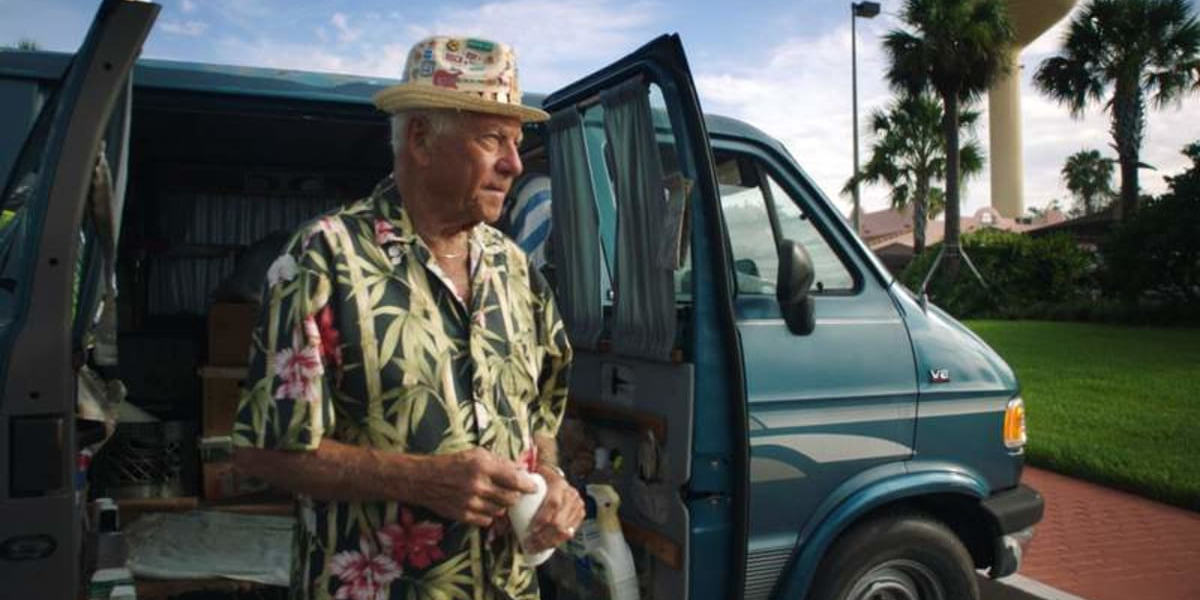
- Dennis: An elderly, transient man living out of his van while attempting to find female residents within the community to assist him financially and provide shelter.
- Barbara: A widowed resident dealing with deep isolation and loneliness who seeks romantic connection while working and attending local social events, such as Parrot Head themed parties.
Hayes noted that through these character studies, Oppenheim succeeded in fracturing the “veneer of tropical Xanadu,” revealing real-time personal distress set against a meticulously controlled environment.
Background of the Development
The cinematic trajectory of filmmaker Lance Oppenheim reflects a growing trend in modern documentary filmmaking that merges traditional investigative journalism with stylized visual storytelling. Oppenheim first gained prominent media industry recognition through his collaboration with The New York Times’ Op-Docs division, a platform dedicated to short-form, director-driven non-fiction films.
His 2020 feature debut, “Some Kind of Heaven,” represented a major partnership between traditional news institutions like The New York Times and feature film producers such as Darren Aronofsky’s Protozoa Pictures. The project was widely noted for its stylized cinematography, framing real-life subjects in highly composed compositions that mirror narrative fiction while adhering to documentary subjects.
The Villages itself has long served as a subject of media interest across American journalism. Established as a small development in the late 1970s before expanding rapidly in the 1990s and 2000s, it grew into one of the fastest-growing metropolitan areas in the United States. Due to its unique demographic structure, strict architectural guidelines, and private governance, news outlets have frequently covered the development as both a demographic phenomenon and a microcosm of American political and social trends.
Oppenheim’s transition from documenting hyper-localized communities in Florida to high-profile national figures like Elizabeth Holmes in “You Can See Everything” illustrates an expanding scope in non-fiction media, where directors apply immersive, character-focused techniques to broader cultural and corporate subjects.
Prediction: How This Development Affects Film Audiences and Documentary Consumers
The release and critical discussion surrounding “You Can See Everything” and Lance Oppenheim’s body of work are poised to impact non-fiction film audiences and media consumers in several key ways:
- Shift in Audience Expectations for True-Crime and Fraud Documentaries As filmmakers like Oppenheim and Nathan Fielder move away from standard archival-heavy investigative formats, audiences are increasingly being exposed to auteur-driven, existential approaches to documentary storytelling. Consumers of non-fiction media may increasingly expect future documentaries covering public figures to focus less on familiar linear facts and more on thematic explorations of human psychology, deception, and truth.
- Renewed Archival Interest in Independent Non-Fiction Cinema High-profile theatrical releases by emerging directors frequently drive home-viewing traffic back to their earlier, smaller-budget catalog works. As columnists and critics highlight connections between “You Can See Everything” and “Some Kind of Heaven,” digital streaming platforms hosting older independent documentaries are likely to see increased viewership and rental demand from audiences seeking context on a director’s stylistic evolution.
- Evolving Perception of Florida in Popular Culture and Media Continued journalistic and artistic focus on Florida’s unique developments, such as The Villages, reinforces the state’s role in the public consciousness as a key symbol of modern American lifestyle experiments. For general audiences, nuanced documentary portrayals help dismantle simplified urban legends and viral myths, replacing them with a more detailed understanding of the complex socioeconomic realities underlying planned retirement environments.