Key Points
- Jean Claude Saint Cyr, 63, surrendered to law enforcement officers on 19 October 2026 following a five-month investigation into a fatal multi-vehicle collision.
- Investigators established that Saint Cyr was driving a 2023 Land Rover Discovery at speeds between 98 mph and 102 mph in a posted 30 mph area.
- His 59-year-old wife, Fedeline Alexis Saint Cyr, was thrown clear of the vehicle and pronounced dead at the scene, whilst other motorists sustained injuries and nearby property suffered significant damage.
- Saint Cyr faces multiple criminal counts, including vehicular homicide, reckless driving causing serious bodily injury, and reckless driving causing injury or property damage.
- Court records confirm he was released on 22 October 2026 on bond, subject to stringent conditions including GPS tracking, surrender of his passport, and a complete driving ban.
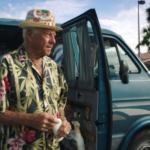
Deerfield Beach (Florida Report Daily) october 24, 2026 – A 63-year-old Florida resident has surrendered to law enforcement authorities nearly five months after driving a high-performance vehicle at speeds exceeding 100 mph in a 30 mph residential zone, causing a devastating multi-vehicle collision that claimed the life of his wife and left multiple bystanders injured. Jean Claude Saint Cyr turned himself in to the authorities on 19 October following an extensive investigation by traffic homicide detectives. On 22 October, Saint Cyr was released from custody on a $166,000 bond subject to strict monitoring conditions, court filings confirm.
As reported by Michelle Spitzer of USA TODAY Network-Florida, law enforcement officials established that Saint Cyr was traveling at “an average speed between 98 and 102 mph” through a 30 mph designated zone on 26 May prior to the catastrophe. The excessive speed led directly to the violent loss of control, striking a stationary vehicle before slamming into a commercial van.
The impact caused Saint Cyr’s Land Rover to violently overturn. His 59-year-old wife, Fedeline Alexis Saint Cyr, was ejected from the passenger cabin during the impact and died at the scene from fatal traumatic injuries. Emergency first responders treated several other injured motorists, while adjacent residential properties sustained heavy structural and boundary damage from debris and secondary vehicle impacts.
Following an exhaustive forensic reconstruction of the crash scene, an arrest warrant was officially issued for Saint Cyr in September. As detailed by local media outlets covering Broward County judicial proceedings, including reporter Ted Scouten of CBS Miami, prosecutors filed serious felony charges against the driver, including vehicular homicide, reckless driving causing serious bodily injury, and multiple counts of reckless driving resulting in personal injury and property damage.
During judicial hearings reviewing bail conditions, the presiding magistrate sanctioned Saint Cyr’s release on a $166,000 bond. However, the court imposed rigorous statutory oversight, requiring him to surrender his passport, wear an active GPS location monitoring unit, and adhere to an absolute prohibition against operating any motor vehicle.
What leads to a vehicular homicide charge in Florida?
Under Florida state law, vehicular homicide is classified as a severe felony offense defined as the killing of a human being caused by the operation of a motor vehicle in a reckless manner likely to cause death or great bodily harm to another. Unlike simple negligence or standard civil traffic infractions, vehicular homicide requires prosecutors to demonstrate intentional or extreme disregard for safety, known legally as reckless driving. Operating a motor vehicle at more than 70 mph over the posted speed limit in a residential or suburban corridor provides clear evidentiary support for high-level reckless driving allegations.
What were the key factors in the Deerfield Beach collision?
Investigators identified speed as the primary contributing factor in the 26 May incident. Physical evidence retrieved from the vehicle’s event data recorder (EDR) and surrounding video surveillance footage confirmed that the Land Rover maintained speeds between 98 mph and 102 mph up to the point of impact. The sheer momentum generated by a heavy vehicle at that velocity drastically reduced stopping distance, turning a standard roadway approach into a fatal multi-vehicle chain reaction.
Background of the particular development
High-speed vehicular crashes in suburban residential corridors have drawn increased scrutiny from law enforcement agencies and civil safety advocates across Florida over recent years. Statistics from state transportation safety departments indicate a significant rise in severe traffic fatalities linked directly to excessive speeding and aggressive driving behaviours.
In response, local law enforcement bodies, including the Broward Sheriff’s Office, have intensified their implementation of specialized Traffic Homicide Units. These specialized teams utilize advanced crash reconstruction technology, digital telemetry analysis, and forensic mapping to evaluate high-speed collisions. Because complex accident investigations require months of technical analysis, electronic data extraction, and toxicology reviews before formal criminal charges can be brought, statutory arrest warrants—such as the one issued for Saint Cyr in September—often follow long after the initial event.
Predictions: Impact on Florida motorists and community road safety
This high-profile legal proceeding is expected to have notable implications for local motorists, suburban communities, and judicial precedents regarding severe traffic offences:
- Increased Judicial and Prosecutorial Rigour: The strict pre-trial release conditions imposed on Saint Cyr—including high bond amounts, passport surrenders, and total driving bans—signal a growing judicial intolerance for high-speed reckless driving offences. Drivers in Florida facing extreme speeding allegations are likely to encounter rigorous prosecution and strict pre-trial restrictions.
- Heightened Traffic Enforcement in Suburban Zones: In the wake of high-profile fatalities, local municipalities and county sheriff departments are predicted to deploy targeted speed-enforcement operations and traffic-calming infrastructure along arterial residential roads to curb excessive speeding.
- Legal Precedents for Electronic Evidence Usage: The reliance on vehicle telemetry data to establish exact speeds between 98 mph and 102 mph highlights the pivotal role modern automotive “black boxes” play in criminal prosecutions. Drivers and legal professionals can expect telemetry data to remain a cornerstone of vehicular homicide trials across the state.