Key Points
- A female Citibank employee was fatally shot after an armed suspect drove a sedan through a perimeter fence into an outdoor seating area at a Tampa business complex on November 4.
- The suspect armed with a rifle entered the building’s cafeteria and was fatally shot by an on-site security guard during an exchange of gunfire.
- Four additional individuals suffered non-life-threatening injuries during the collision and initial assault, with authorities reviewing whether injuries stemmed from vehicle impact or gunfire.
- Hillsborough County Sheriff’s Office deputies and federal agents from the Bureau of Alcohol, Tobacco, Firearms and Explosives (ATF) cleared the campus containing approximately 3,200 employees.
- Citigroup Chief Executive Officer Jane Fraser confirmed the fatality in an internal memo, praising security personnel for preventing further loss of life while making counseling resources available.
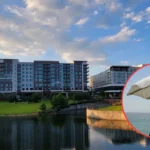
Tampa (Florida Report Daily) November 05, 2026 – A female corporate employee was killed and an armed gunman was fatally shot by an on-site security guard following a violent security breach at a Citibank office campus in Hillsborough County near Tampa, Florida. Law enforcement authorities received multiple emergency calls starting at approximately 12:11 p.m. on Wednesday, reporting an active threat after a four-door sedan crashed through a perimeter fence into an outdoor dining area. The driver emerged from the vehicle armed with a rifle, fatally shot the employee, and moved into the corporate cafeteria, where an exchange of gunfire with corporate security neutralized the suspect.
- Key Points
- How Did the Armed Attack Unfold at the Tampa Citibank Business Complex?
- What Details Have Authorities and Corporate Leadership Released Regarding Victims and Motives?
- Background of Corporate Security Protocols and Facility Safeguards
- Prediction: How This Development Can Affect Corporate Security Standards and Office Workers
As reported by law enforcement correspondents for ABC News and local affiliate WFTS, first responders from the Hillsborough County Sheriff’s Office arrived alongside armored vehicles and heavily armed tactical teams to secure the sprawling financial facility. The crime scene, which encompasses both outdoor seating zones and interior dining infrastructure, remained cordoned off into Thursday as forensic teams and federal investigators processed evidence.
How Did the Armed Attack Unfold at the Tampa Citibank Business Complex?
According to detailed statements provided during an official press briefing by Hillsborough County Chief Deputy Frank Losat, the security breach began when the suspect deliberately drove a four-door sedan through a perimeter fence enclosing the office grounds.
As reported by ABC News, Chief Deputy Frank Losat described the sequence of events during Wednesday’s media conference:
“The suspect initially drove his four-door sedan through a fenced area and crashed into an outdoor seating area where multiple people were having lunch. Upon the car coming to rest, the suspect exits the vehicle with a rifle, approaches the female, and she is shot.”
Following the initial shooting outside, the armed suspect entered the building’s main cafeteria area. An armed security guard posted at the complex intervened directly, engaging the gunman in an exchange of gunfire inside the cafeteria. The suspect sustained fatal gunshot wounds during the encounter and was transported to an area hospital, where medical staff formally pronounced him dead.
What Details Have Authorities and Corporate Leadership Released Regarding Victims and Motives?
Official identification of both the deceased employee and the gunman remains pending final notification of next of kin. Chief Deputy Frank Losat confirmed that four other individuals sustained non-life-threatening injuries during the incident, though investigators are still determining whether their injuries were caused by the crashing vehicle or flying debris.
As reported by ABC News, sources familiar with the preliminary investigation indicated that federal and local detectives are examining potential financial grievances tied directly to the banking institution. Earlier on Wednesday, Hillsborough County Sheriff Chad Chronister posted on social media channels that preliminary information suggested the shooting was a targeted incident. However, during the subsequent press conference, Chief Deputy Frank Losat urged caution regarding motives, emphasizing:
“We are very fluid at this stage of the investigation. This is a sad day for everybody involved, the Tampa Bay area and surrounding communities and the law enforcement partners. Investigators have to work through details and that information is subject to change.”
Addressing the extensive scope of the investigative work required, Chief Deputy Frank Losat highlighted the scale of potential witnesses present during the midday attack:
“With that many witnesses, up to 3,200 witnesses, we will be doing interviews well into the night.”
In an internal message sent to global staff members on Wednesday afternoon, Citigroup Chief Executive Officer Jane Fraser confirmed the loss of their colleague and commended the swift response of the facility’s security team.
As reported by ABC News, Citigroup CEO Jane Fraser stated in her official message:
“This is a terrible tragedy for our Citi family. My heart goes out to our colleague’s loved ones, all our colleagues in Tampa and everyone affected by this horrific act of violence. I am grateful to the brave actions of our security team who prevented this awful day from being even worse.”
Chief Deputy Frank Losat similarly praised the armed guard’s decisive actions, noting that the guard successfully “stopped the threat” when there was clear “potential for further violence” inside the crowded dining area.
Background of Corporate Security Protocols and Facility Safeguards
The active shooter incident at the Tampa business complex underscores the evolving operational landscape surrounding corporate facility protection and emergency response protocols across North America. Over the past decade, major multinational financial institutions have increasingly invested in physical access controls, perimeter barriers, and dedicated private security details trained to handle active threat scenarios within large commercial office parks.
Commercial complexes housing thousands of employees typically employ layered security strategies, combining automated access gates, surveillance monitoring, and armed security officers. In recent years, corporate risk management teams have updated emergency action plans to integrate joint response drills alongside local sheriff departments and federal agencies such as the ATF and FBI. The intervention by the security guard inside the Tampa facility highlights how rapid, localized armed response models are designed to mitigate casualties prior to the arrival of municipal law enforcement units.
Prediction: How This Development Can Affect Corporate Security Standards and Office Workers
The lethal incident at the Tampa Citibank facility is expected to trigger structural reviews and operational adjustments across commercial real estate operations and financial sector workplaces.
Impact on Financial Sector Workers and Corporate Employees
For corporate personnel working at large suburban campuses, the attack is likely to heighten safety concerns regarding open-air communal amenities such as outdoor dining terraces and unfortified perimeter fencing. In the short term, companies will face increased demand from staff for transparent security protocols, expanded remote working flexibilities during crisis recovery periods, and accessible mental health support resources to process workplace trauma.
Impact on Facility Management and Commercial Physical Security
For corporate facility managers and commercial real estate developers, the security breach will likely prompt structural upgrades to perimeter defenses. Property managers are expected to accelerate the installation of heavy-duty bollards and reinforced vehicle barriers around pedestrian plazas and outdoor seating areas to prevent vehicle ramming intrusions. Furthermore, corporate entities are likely to increase investments in armed security coverage and review access control protocols across multi-building enterprise campuses nationwide.