

Key Points
- Florida Governor Ron DeSantis issued an executive order on Wednesday, November 18, 2026, expanding the state of emergency to seven additional counties: Broward, Duval, Flagler, Miami-Dade, Monroe, Putnam, and St. Johns.
- The expansion adds roughly 6.5 million residents to the emergency area, bringing the total number of affected counties to 21 and placing an estimated 11.24 million people—nearly a third of Florida—at risk of flooding.
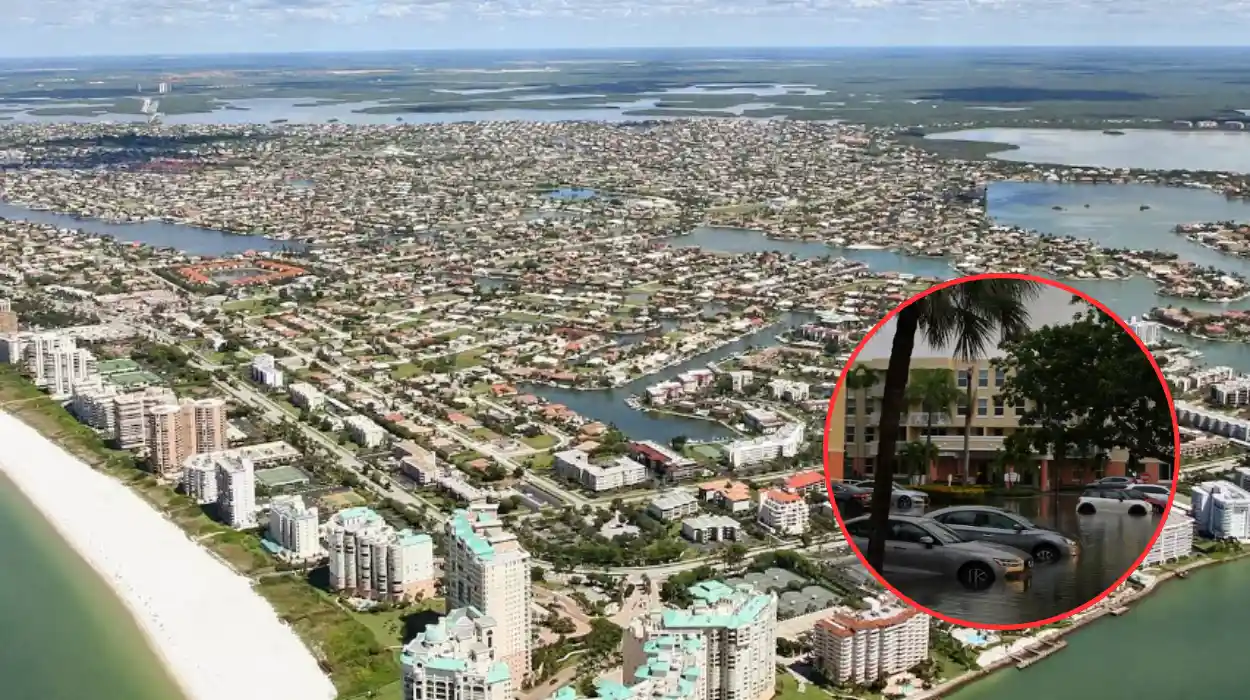
- Flood warnings have prompted the closure of schools, parks, libraries, and government buildings across affected regions.
- State officials have deployed hundreds of National Guard and Florida State Guard personnel alongside more than 6,000 feet of flood control devices, standby shelters, generators, and vacuum trucks.
- Severe November rainfall has shattered records, including 40 inches of rain over 20 days in Grant-Valkaria—equivalent to 14 Novembers’ worth of rainfall—and 27 inches in Cocoa Beach.
- The St. Johns River near Cocoa rose from 16ft to 17.2ft on Wednesday and is forecast to reach an all-time high of 17.4ft by Saturday, with meteorologists warning that slow drainage could keep some homes and businesses inundated into 2027.
- Under Executive Order 26-227 and its subsequent amendments, the emergency declaration remains in effect for 60 days until January 1, 2027, unless extended, granting broad operational powers to state agencies and emergency coordinators.
Tallahassee (Florida Report Daily) November 21, 2026 – Florida Governor Ron DeSantis has expanded the state’s flood emergency declaration to include seven additional counties, placing an estimated 11.24 million residents across 21 counties under a state of emergency as historic November rainfall continues to inundate the Sunshine State. Signed on Wednesday, November 18, the latest expansion brings major population centres including Miami-Dade and Broward counties into the emergency zone. With rivers reaching record flood stages and further downpours forecast along the east coast, state agencies have mobilised National Guard troops, flood barriers, and emergency infrastructure protections under powers remaining in effect until January 1, 2027.
- Key Points
- Which Florida Counties Are Under a State of Emergency?
- How Has the State Government Responded to the Flooding?
- How Severe Is the Rainfall and River Flooding Across Florida?
- What Powers Does Executive Order 26-227 Grant State Officials?
- What Is the Background of Florida’s November 2026 Flood Emergency?
- How Could This Flooding and State of Emergency Affect Florida Residents and Businesses?
Which Florida Counties Are Under a State of Emergency?
As reported by Anna Commander of Newsweek, an executive order issued on Wednesday, November 18, 2026, added Broward, Duval, Flagler, Miami-Dade, Monroe, Putnam, and St. Johns counties to Florida’s existing emergency list. This latest expansion covers approximately 6.5 million additional residents, placing Miami at the centre of the expanded emergency zone and bringing the total number of counties affected to 21.
The emergency declaration began on November 2, 2026, when Governor Ron DeSantis initially declared a state of emergency in seven counties: Brevard, DeSoto, Hardee, Highlands, Indian River, Martin, and St. Lucie. Two days later, on November 4, the declaration was expanded to include Glades, Hendry, Lake, Okeechobee, Palm Beach, Seminole, and Volusia counties. Across all 21 counties, an estimated 11.24 million people are currently potentially affected, placing nearly one-third of the state at risk of flooding.
How Has the State Government Responded to the Flooding?
Widespread flood warnings have forced the closure of schools, parks, libraries, and government buildings across impacted communities. In response, Florida has deployed hundreds of National Guardsmen, Florida State Guard members, and other emergency personnel to support ongoing operations.
As reported by Anna Commander of Newsweek, Governor Ron DeSantis stated on the social media platform X: “As heavy rainfall impacts communities across Florida, the state is continuing our active response efforts. Florida will continue deploying resources and working alongside local partners to protect residents and respond to the needs of impacted communities.”
On Thursday, Mr DeSantis confirmed that the state has prepared more than 6,000 feet of flood control devices, placed shelters on standby, and positioned additional emergency equipment—including generators and vacuum trucks—for rapid deployment as needed. Meanwhile, on Wednesday, the South Florida Water Management District issued its own emergency order authorising the pumping of affected areas to mitigate flood risks. Newsweek noted it had contacted Mr DeSantis’ office for additional comment.
How Severe Is the Rainfall and River Flooding Across Florida?
South Florida and central coastal communities have experienced relentless torrential rain throughout November, with some areas recording more than 12 inches over a two-day span. Local forecasters project the east coast will receive an additional 3 to 7 inches of rainfall over the coming days, with isolated areas potentially seeing up to 10 inches. Slow-moving rains and thunderstorms continuing across the east coast on Friday threaten to add water to already saturated ground and heighten the risk of flash flooding.
Meteorologists highlighted the unprecedented scale of the November precipitation:
- AccuWeather: Water levels along the St. Johns River have threatened nearby residences, while the river near Cocoa reached a major flood stage after rising from 16ft to 17.2ft on Wednesday. Additional rainfall is projected to push the river to an all-time record of 17.4ft by Saturday. As reported by Anna Commander of Newsweek, AccuWeather meteorologist Alex Sosnowski stated: “The rain may stop, but the flooding could last for months. Water drains so slowly through the St. Johns River system that some homes and businesses could remain inundated into 2027, even if no additional rain falls through the end of the year.”
- WFLA-TV: On Friday, WFLA-TV Chief Meteorologist Jeff Berardelli shared rainfall totals on X comparing November accumulations to historical monthly averages. As reported by Anna Commander of Newsweek, Mr Berardelli stated: “14 Months of Rain in 20 Days?! Yes, Grant-Valkaria, #Florida – just south of Melbourne – has had 40” of rain in the last 20 days, that’s 14 Novembers worth of rainfall! They are not alone. Cocoa Beach has had 27” of rain, that’s 10 Novembers worth of rain. Port St Lucie 5 months, West Palm 4 months, and Ft Lauderdale 4 months. AND… more rain is on the way before the month ends.”
- FOX35 News: Noah Bergen, weeknight senior meteorologist at FOX35 News in Orlando, also posted on X on Friday describing flooding visuals as “terrifying.” As reported by Anna Commander of Newsweek, Mr Bergen stated in part: “Terrifying sights today all over Volusia and Flagler Counties in central Florida. The rainiest Nov. 20 on record officially, with an entire month’s worth of rain in only a matter of hours.”
What Powers Does Executive Order 26-227 Grant State Officials?
Under Executive Order 26-227—first signed on November 2 and subsequently amended on November 4 (Executive Order 26-228) and November 18 (Executive Order 26-232)—the Governor’s office has granted state officials broad emergency powers to expedite response and recovery efforts. The order notes that flooding has disrupted critical regional infrastructure, including interstates, roads, airports, and schools, and designates the head of the Division of Emergency Management as the State Coordinating Officer.
Key provisions authorised under the emergency orders include:
- Command and Mutual Aid: The State Coordinating Officer is empowered to invoke mutual aid agreements with other states, request direct federal assistance, and assume command over state, regional, and local personnel, including law enforcement.
- Regulatory Suspensions: The officer may suspend any statute, rule, or order that impedes response operations, provided each suspension is explicitly specified and assigned an expiration date.
- Military Activation: Governor DeSantis authorised the activation of the Florida National Guard and the Florida State Guard as required.
- Transport and Supply Chain: The Florida Department of Transportation is permitted to waive road tolls, close highways, and relax size and weight restrictions for vehicles transporting emergency supplies.
- Medical Access: Pharmacists are authorised to dispense emergency 30-day refills of maintenance prescriptions, while designated hospital pharmacies may dispense up to 72 hours of medication.
- Drones and Shelters: State and local agencies are exempted from state drone-use restrictions to conduct damage assessments, support search-and-rescue operations, and prevent imminent hazards. Public schools and government buildings must also be converted into emergency shelters if required.
The emergency declaration took effect immediately upon signing and remains active for 60 days from November 2, expiring around January 1, 2027, unless formally extended by the Governor.
What Is the Background of Florida’s November 2026 Flood Emergency?
The current state of emergency stems from a broad area of low pressure that moved across the Florida peninsula between October 31 and November 2, 2026, triggering widespread heavy rainfall and flash flood warnings across seven initial counties. Subsequent weather systems delivered successive waves of extreme precipitation across South and Central Florida throughout November, including more than 19 inches of rain within 12 hours in parts of Palm Beach County on November 4 and over 10 inches within 12 hours in parts of Broward County on November 17.
These conditions prompted Governor DeSantis to progressively expand Executive Order 26-227 from seven counties to 14 on November 4, and finally to 21 counties on November 18, while state authorities also submitted a request for a Federal Major Disaster Declaration earlier in the month.
How Could This Flooding and State of Emergency Affect Florida Residents and Businesses?
For the estimated 11.24 million residents living across the 21 affected counties, the immediate impact involves ongoing disruptions to daily routines, including closures of public schools, municipal facilities, and major transport corridors. Residents relying on daily maintenance medications benefit from emergency 30-day pharmacy refill allowances during transit disruptions, while households located near slow-draining waterways such as the St. Johns River face the prospect of prolonged water inundation extending well into 2027, even after rainfall subsides.
For local businesses, logistics operators, and municipal governments, extended flooding along coastal and central corridors threatens prolonged property damage, commercial downtime, and supply-chain delays. While relaxed commercial vehicle weight limits, toll waivers, and active water-management pumping orders are designed to ease emergency supply movement and drainage, business owners and local authorities across eastern and southern Florida will likely face extended recovery, insurance, and infrastructure repair demands through the end of 2026 and into early 2027.