

Key Points
- Historic Florida Election: On 3 November 2026, 32-year-old Quinnie Perez became the first openly transgender person elected to public office in Florida, winning Seat 1 on the five-member Orange County Soil and Water Conservation District board by a margin of roughly 5,000 votes (capturing over 35,500 votes, or nearly 43 per cent in a three-way race).
- Role and Campaign Focus: Perez, a medical marijuana cultivator and daughter of Mexican immigrant farmworkers, will assume the unpaid, nonpartisan advisory role in January 2027 after campaigning on agricultural worker protections, opposition to the Osceola Parkway extension through Split Oak Forest and the Tuscana development at Shingle Creek, and support for an Orange County stormwater management fee.
- Advocacy and Political Reaction: Equality Florida director of transgender rights Angelique Godwin and GLAAD president and CEO Sarah Kate Ellis highlighted the victory as evidence that anti-transgender campaign messaging failed in the 2026 midterms, despite $400 million spent nationally on anti-LGBTQ advertising—including $187 million on anti-trans ads, according to Human Rights Campaign data from AdImpact.
- Governor Ron DeSantis’s Assessment: Speaking at a post-election press conference in Tallahassee on 4 November, Republican Governor Ron DeSantis acknowledged that spending hundreds of millions of dollars on transgender-focused campaign advertisements was not motivating voters in 2026.
- Campaign Experience and Social Media Criticism: Perez reported experiencing no harassment or campaign attacks while canvassing in southwest Orange County communities including Windermere, Winter Garden, and Oakland, though former Florida Republican Congressman Matt Gaetz later posted a critical remark on social media targeting her victory photograph.
Orlando, Florida (Florida Report Daily) November 24, 2026 – Voters in Orange County, Florida, elected 32-year-old Quinnie Perez to the Orange County Soil and Water Conservation District board on 3 November 2026, making her the first openly transgender person ever elected to public office in the state. Perez won Seat 1 on the unpaid, nonpartisan advisory board by a margin of approximately 5,000 votes after campaigning on farmworker conditions, wetland conservation, and local growth management. Civil rights groups including Equality Florida and GLAAD cited her win alongside national election results as evidence that $187 million in anti-transgender campaign advertising failed to sway voters, a political dynamic also acknowledged by Republican Governor Ron DeSantis following the election.
- Key Points
- Who Is Quinnie Perez and What Office Did She Win in Orange County?
- What Issues Did Quinnie Perez Campaign On in Southwest Orange County?
- How Did LGBTQ+ Advocates and Governor Ron DeSantis React to the 2026 Election Results?
- Background: Florida’s Legislative Landscape for LGBTQ+ Residents Since 2023
- Prediction: How Could This Election Affect LGBTQ+ Candidates and Local Conservation Policy in Florida?
Who Is Quinnie Perez and What Office Did She Win in Orange County?
Quinnie Perez, 32, made electoral history in Florida on Tuesday, 3 November 2026, when voters in Orange County elected her to Seat 1 on the five-member Orange County Soil and Water Conservation District Board of Supervisors. The victory makes Perez—who grew up in rural Ocala and resides in southwest Orange County—the first openly transgender person elected to public office in the state of Florida.
According to unofficial Orange County election returns reported by Angel Green and Brody Wooddell of WFTV, Perez finished ahead of opponents Doug Sahr and Vicente Rafael Perez Carreno in the three-way contest, capturing more than 35,500 votes—nearly 43 per cent of the ballot—and winning by a margin of roughly 5,000 votes across a district encompassing the conservative communities of Windermere, Winter Garden, and Oakland.
The Orange County Soil and Water Conservation District is a nonpartisan, unpaid position without an independent operating budget or taxing authority. Functioning primarily in an advisory capacity, the board acts as a liaison between local residents and state and federal agencies on issues including soil conservation, stormwater management, educational outreach, and environmental stewardship. Perez is scheduled to assume office in January 2027.
Reflecting on the unexpected margin of victory, Quinnie Perez stated: “Frankly, I am still in shock”. Speaking at her election night watch party, as reported by WFTV, Perez told local outlet Vox Populi: “It’s just amazing to be able to see that the voters saw somebody like me and they gave me a chance”.
What Issues Did Quinnie Perez Campaign On in Southwest Orange County?
Although Perez was open about her gender identity throughout the race, she did not make it the central theme of her campaign, noting that many voters in the low-profile local race were likely unfamiliar with her personal background. Addressing how she interacted with residents while canvassing door-to-door, Quinnie Perez explained: “Some people looked clearly surprised, so I would break the ice, then talk about the policy issues people were more focused on”.
Perez, who works in the medical cannabis industry as a cultivator and harvester and is the daughter of Mexican immigrant farmworkers, centred her platform on agricultural labour standards and local environmental policy. Outlining her campaign priorities, Perez stated: “I focused on the issues that affect my constituents, home rule, urban sprawl and smart growth”. She added: “I didn’t make it about being trans but about what people are dealing with locally”.
Specifically, Perez campaigned on:
- Improving working conditions, safety standards, and fair wages for agricultural labourers.
- Opposing the proposed Osceola Parkway extension through Split Oak Forest.
- Opposing the approved Tuscana residential and commercial development at Shingle Creek near the headwaters of the Everglades.
- Supporting a dedicated stormwater management fee for Orange County residents to fund drainage and green infrastructure.
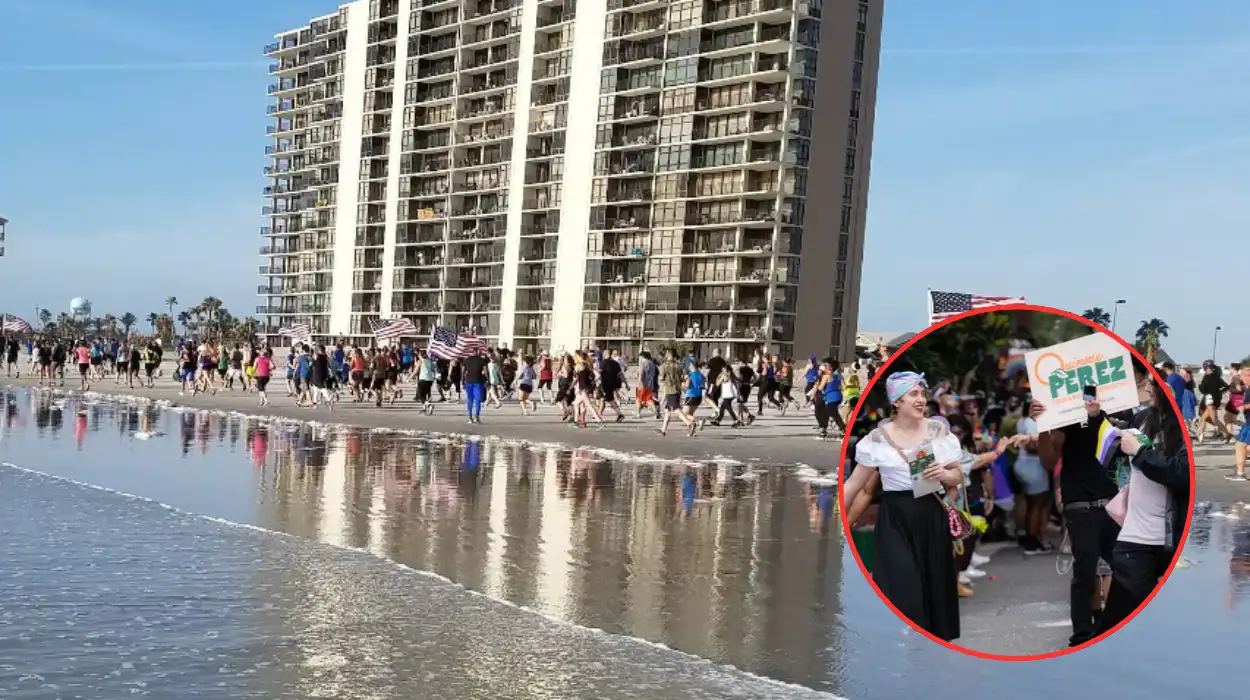
While campaigning across neighbourhoods and community gatherings in southwest Orange County, Perez encountered no hostile confrontations or formal campaign attacks. Summarising her experience on the trail, Perez stated: “There was never a situation where I felt unsafe or harassed while campaigning”. Following the election, however, former Florida Republican Congressman Matt Gaetz reposted a photograph from Perez’s election night victory party on social media alongside the caption: “To defeat Hamas in Gaza we surrendered political power at home to transexuals”.
How Did LGBTQ+ Advocates and Governor Ron DeSantis React to the 2026 Election Results?
Civil rights organisations pointed to Perez’s election—alongside broader state and national results—as a notable milestone following an election cycle heavily marked by campaign messaging targeting transgender people. According to advertising data compiled by AdImpact and cited by the Human Rights Campaign, Republicans spent $400 million nationally on anti-LGBTQ campaign advertisements during the 2026 election cycle, including $187 million specifically dedicated to anti-transgender ads.
Angelique Godwin, director of transgender rights for the statewide civil rights group Equality Florida, stated: “Quinn’s success allows us the opportunity to realize it’s possible … to see more trans people in these roles”. Godwin added: “In state offices and across the United States we see more people than ever, despite the anti-trans rhetoric and bills and attacks on our community to say these people don’t exist”.
Sharing a similar perspective on the broader significance of holding local office, Quinnie Perez stated: “I’m doing something bigger than myself”. She added that it is “important to gain political power, especially in Florida with a lot of the anti-trans rhetoric and anti-LGBTQ legislation”.
At the national level, advocacy organisation GLAAD reported that the November 2026 elections produced the “queerest Congress in history,” alongside the election of transgender or nonbinary candidates to state legislatures in Alabama, Georgia, and Washington. Voters in Virginia also approved a ballot measure enshrining marriage equality in their state constitution, while voters in Missouri rejected a proposal to ban gender-affirming healthcare for transgender individuals. Within Florida, GLAAD counts 41 openly gay elected officials—comprising at least five mayors, Orlando State Senator Carlos Guillermo Smith, several state representatives, 10 judicial officers, and at least 25 local officeholders.
Commenting on the national electoral outcomes, GLAAD president and CEO Sarah Kate Ellis stated: “Voters have resoundingly delivered a historic victory for freedom, accountability, and democracy. In state after state they voted for an America that looks like America, diverse in every way, including LGBTQ candidates and ballot measures”. Ellis continued: “The reality is undeniable: fearmongering about transgender people is a losing strategy. Election 2026 must go down in history as the last campaign to try it”.
What Did Florida Governor Ron DeSantis Say About Anti-Transgender Campaign Ads?
During a post-election press conference in Tallahassee on Wednesday, 4 November 2026, Republican Governor Ron DeSantis—who is concluding his second term in office and has been mentioned as a potential 2028 presidential contender—acknowledged that heavy spending on transgender-related campaign messaging failed to resonate with voters amid broader frustration with President Donald Trump’s administration.
Addressing reporters in Tallahassee, Governor Ron DeSantis stated: “I knew Republicans were in trouble when they were running ads on and spending hundreds of millions of dollars across the country on transgender ads”. Explaining that voter priorities had shifted over the past four years away from what he described as the “peak woke era” and cultural disputes, DeSantis added: “That was not the issue motivating voters, and it was kind of an attempt to just scare Republicans to vote”.
Background: Florida’s Legislative Landscape for LGBTQ+ Residents Since 2023
Perez’s election took place in a state where Republican Governor Ron DeSantis and the GOP-majority Florida Legislature have enacted numerous laws over recent years restricting rights and public accommodations for LGBTQ+ residents. According to the Movement Advancement Project, a nonprofit think tank tracking equal rights policies, Florida is home to roughly 1 million residents who identify as LGBTQ+, including approximately 898,000 adults and 147,000 youths.
Legislation adopted in Florida in recent years includes bans prohibiting transgender students from competing on girls’ and women’s school sports teams and restricting bathroom access based on biological sex at birth. State lawmakers also barred minors from attending drag performances, prohibited physicians from prescribing puberty blockers to minors, restricted discussions of sexual orientation and gender identity in public school classrooms under the Parental Rights in Education Act—widely referred to by critics as the “Don’t Say Gay” law—and barred the use of Medicaid or state funds for transition-related medical care while permitting insurers and healthcare providers to deny treatment on moral, ethical, or religious grounds. In 2023, two civil rights organisations issued formal travel advisories warning LGBTQ+ visitors of potential risks in Florida, even as municipalities such as Orlando maintained reputations as welcoming communities.
Prediction: How Could This Election Affect LGBTQ+ Candidates and Local Conservation Policy in Florida?
For LGBTQ+ residents and prospective political candidates across Florida, Quinnie Perez’s victory in a district encompassing conservative suburbs demonstrates that openly transgender candidates can win nonpartisan municipal and county offices by focusing on hyperlocal economic, agricultural, and environmental concerns rather than national culture-war debates. Within Orange County specifically, once Perez takes her seat on the Soil and Water Conservation District board in January 2027, local residents, environmental advocates, and agricultural workers can expect heightened board-level advocacy surrounding wetland preservation at Shingle Creek and Split Oak Forest, stormwater management funding, and outreach connecting farmworkers with state and federal conservation programmes.