Key Points
- Fatal Aviation Disaster: All nine occupants aboard a $2 million Learjet 60 business jet perished when the twin-engine aircraft plummeted vertically out of the sky and exploded in Greenacres, Florida.
- Severe Descent and Emergency Audio: Air traffic control recordings captured the female pilot screaming “mayday” and declaring an “overspeed condition” while reporting a catastrophic rate of descent between 10,000 and 22,000 feet per minute alongside a 60-degree wing bank.
- Impact and Infrastructure Damage: The aircraft struck near the intersection of Military Trail and 10th Avenue North, leaving a massive crater, severing power lines and water mains, and scattering debris near a mobile home community.
- Mass Displacement On Ground: Authorities evacuated nearly 600 residents from a nearby trailer park due to infrastructure damage and crime scene protocols, with officials estimating road closures will persist for at least 30 days.
- Weather and Political Proximity: The tragedy occurred amid poor weather conditions—including rain, lightning, and moderate turbulence—just eight miles from President Donald Trump’s Mar-a-Lago estate in Palm Beach.
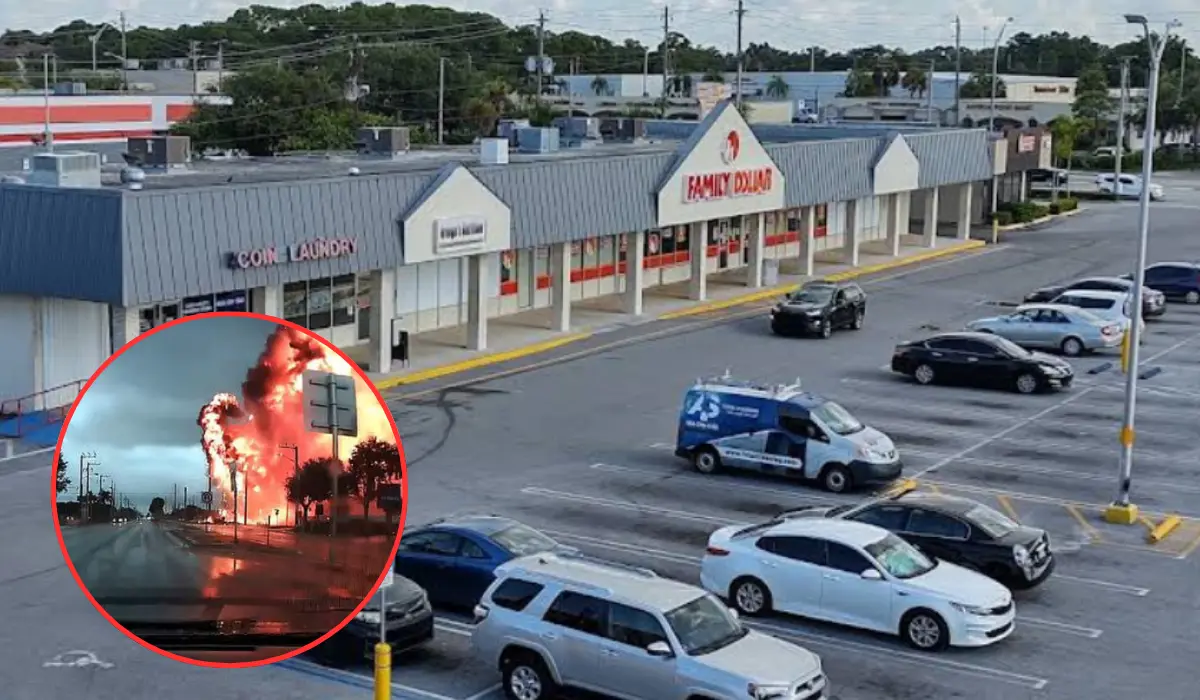
Greenacres (Florida Report Daily) November 02, 2026 – All nine individuals aboard a private twin-engine Learjet 60 business jet were killed on Sunday afternoon when the aircraft plunged vertically from the sky “like a missile” and exploded into a massive fireball near a residential area in Greenacres, Florida. The catastrophic crash left a deep smoldering crater near the busy intersection of Military Trail and 10th Avenue North, severing power lines and underground water mains while forcing the displacement of nearly 600 local residents.
- Key Points
- How Did the Final Cockpit Transmissions Outline the Aircraft’s Fatal Descent?
- What Impact Did the Crash Have on Local Infrastructure and Residents?
- What Are the Confirmed Facts versus Pending Investigative Inquiries?
- Background of Aviation Safety Protocols and Weather Hazards in South Florida
- Prediction: How This Development Will Affect Aviation Operations and Local Communities
As reported by Daily Mail journalists, eyewitnesses and nearby residents described a terrifying scene as the $2 million jet impacted the ground at approximately 12:50 p.m. local time. A local mother recounted how her apartment shook violently from what felt like a “super big explosion,” while driver dashcam footage captured the jet’s steep descent and subsequent wall of flame. Standing near the wreckage in heavy rain, Florida Governor Ron DeSantis described the impact video as “jarring,” noting that “it was like… a missile coming down and a massive explosion, debris going everywhere”.
According to air traffic control audio recordings published across news media outlets, the flight had departed Austin-Bergstrom International Airport in Texas and was en route to North Eleuthera Airport in the Bahamas. Shortly before the accident, Miami air traffic controllers advised the crew of “moderate precipitation” and “moderate turbulence” in the area, granting permission to alter course. Seconds later, the female pilot issued a distressed “mayday” call, shouting that the aircraft was in an “overspeed condition” and descending at rates ranging from 10,000 to over 20,000 feet per minute while banking sharply at 60 degrees. Her final transmission warned controllers, “We’re out of time”.
In a public press conference, Palm Beach County Commissioner and former Greenacres Mayor Joel Flores confirmed that although no fatalities or injuries occurred among residents on the ground, nearly 600 individuals residing in an adjacent mobile home community were forced to evacuate. Officials confirmed that the American Red Cross and county emergency services have opened two shelters for the displaced families while federal investigators from the National Transportation Safety Board (NTSB) and the Federal Aviation Administration (FAA) secure the crash site.
How Did the Final Cockpit Transmissions Outline the Aircraft’s Fatal Descent?
The final minute of the flight was marked by severe aerodynamic instability and rapid altitude loss, as revealed in radio communications between the flight crew and Miami air traffic controllers.
As reported by aviation reporters for Daily Mail, the air traffic controller initially attempted to assist the crew through severe localized weather, noting moderate precipitation to the southeast. Shortly after receiving clearance to deviate from the planned flight path, the female pilot reported a sudden emergency:
- Initial Mayday Call: The pilot radioed, “Seven two two bravo delta, we’re descending 8,000… mayday mayday… we’re descending 10,000 ft per minute”.
- Overspeed and Steep Bank: Within seconds, the pilot shrieked, “Declaring emergency, declaring emergency we are in an overspeed condition… descending 20,000 ft per minute… we’re going to crash into the ground”.
- Loss of Control: As the controller urged the crew to talk through the situation, the pilot confirmed the wings were tilted at a extreme 60-degree angle, stating, “We are descending 22,000 ft, and we are banking 60 degrees… We’re out of time”.
Flight data records indicate the Learjet plummeted from 35,250 feet to 8,750 feet in under 60 seconds before impacting the ground nearly vertically. Commenting on the steep flight path, Governor Ron DeSantis noted that “you can make the inference that something happened in the air that was a big problem” prior to ground impact.
What Impact Did the Crash Have on Local Infrastructure and Residents?
The physical impact of the Learjet caused immediate damage to surrounding municipal infrastructure and residential access corridors along Military Trail.
As detailed by local officials, the force of the explosion severed high-voltage power lines, plunging surrounding residential blocks into temporary blackouts. Underground water mains were also breached, affecting municipal utility distribution across parts of Palm Beach County.
Because the impact crater sat adjacent to the sole entrance of a 600-resident mobile home park, law enforcement designated the site a restricted crime scene, preventing residents from returning to their homes. Commissioner Joel Flores stated that the affected stretch of Military Trail will remain closed for at least 30 days to facilitate federal wreckage recovery, road reconstruction, and utility restoration. Nearby educational institutions, including John I. Leonard Community High School, canceled classes to accommodate emergency response operations.
What Are the Confirmed Facts versus Pending Investigative Inquiries?
Established Facts
- Total Occupant Loss: Federal aviation officials confirmed that all nine individuals aboard the Learjet 60 perished in the crash.
- Ground Safety: No bystanders, drivers, or residents on the ground suffered fatal or severe physical injuries despite the heavy explosion.
- Evacuation Protocols: Approximately 600 residents were evacuated to Red Cross community shelters due to site security and severed utilities.
Active Investigations
- Mechanical and Structural Causes: The NTSB and FAA have deployed field investigation teams to examine recovered flight recorders, engine remnants, and airframe structures.
- Weather Factor Analysis: Meteorologists from the National Weather Service are analyzing NEXRAD radar logs to evaluate whether severe atmospheric icing, microbursts, or extreme wind shear contributed to the structural overspeed condition.
Background of Aviation Safety Protocols and Weather Hazards in South Florida
The crash of the Learjet 60 represents one of the most severe business aviation disasters in South Florida in recent years. The Learjet 60, a twin-engine medium-range business jet manufactured by Bombardier Aerospace, is widely utilized for private and corporate charter operations due to its high-altitude cruise capabilities and speed.
South Florida’s coastal airspace experiences frequent convective weather activity, particularly during autumnal frontal transitions where heavy rain, localized icing, and rapid wind shifts occur. Air traffic management protocols around Palm Beach County and West Palm Beach operate under tight airspace constraints given the proximity to major commercial airports and restricted air corridors surrounding presidential residences. When aircraft encounter severe convective turbulence or airframe icing at high altitudes, flight crews must execute precise emergency procedures to maintain aerodynamic control and avoid structural overstress.
Prediction: How This Development Will Affect Aviation Operations and Local Communities
The investigation into the Greenacres Learjet crash will carry distinct operational consequences for local infrastructure, regional transit, and general aviation oversight.
Municipal Disruption and Resident Welfare
For the 600 displaced residents of the Greenacres mobile home community, the 30-day closure of Military Trail will cause ongoing logistical challenges. Extended utility repair work and active scene management by the NTSB will require sustained municipal support, temporary housing provisions, and localized traffic rerouting across Palm Beach County. Local businesses situated along the Military Trail commercial corridor face prolonged revenue losses during the month-long road reconstruction period.
Regulatory and Fleet Safety Reviews
Depending on the preliminary findings released by the NTSB, federal regulators may review operating directives concerning Learjet 60 flight control systems, high-altitude stall recovery, and airframe anti-icing performance in convective weather. If mechanical failure or control surface lockup under overspeed conditions is identified as a contributing factor, the FAA could issue Airworthiness Directives (ADs) requiring fleet-wide inspections of similar business jet models to prevent future catastrophic control loss incidents.